Feeds:
Posts
Comments

Cookbook authors only started giving precise measurements and cooking times a little over a century ago, so figuring out older recipes can be a real challenge. One of the earliest cookbooks we have is De re coquinaria or On the Subject of Cooking. Some of the recipes in it are attributed to Marcus Gavius Apicius who lived in the 1st Century CE and was famed as a gourmet. The book is sometimes also simply referred to as Apicius.

Not being a Latin scholar, I am indebted to the archaeologist-cook Ilaria Gozzini Giacosa who has given us A Taste of Ancient Rome (translated by Anna Herklotz). In this detailed and entertaining book, Ms. Giacosa, gives us everything we need in order to attempt some of Apicius’s ancient recipes in the modern kitchen. Here is Ms. Herklotz’s English translation Apicius’s original recipe for Duck with Turnips:

“Crane or duck with turnips: Wash, truss and boil in a pan with water, salt, and dill until half cooked. Cook the turnips so that they lose their bitterness. Remove the duck from the pan, wash again, and place in a pot with oil and garum and a bouquet of leeks and coriander. Over this put a turnip that has been well washed and cut into very small pieces, and cook. When it has cooked somewhat, add defructum for color. Prepare this sauce: pepper, cumin, coriander, and silphium root, moistened with vinegar and cooking broth. Pour over the duck and boil. When it boils, thicken with starch and add over the [remaining] turnips, Sprinkle with pepper and serve.”

Aren’t you glad they don’t write recipes that way anymore? Ms. Giacosa redacts the recipe, adjusting it to modern expectations by giving some measurements for the ingredients and leaving out the boiling of the duck, instead going straight to roasting it in a pot. The resulting recipe is actually very similar to a classic French dish called Caneton Poêlé aux Navet or Casserole-roasted Duckling with Turnips. I decided to put the two together and make a sort of Caneton Poêlé aux Navet á l’Apicius by using the French method with the ancient Roman flavors.

You may have noticed a few unfamiliar ingredients in the original recipe, namely: garum, defrutum, and silphium. Garum is perhaps the most ubiquitous ingredient in ancient Roman cooking. It is a fermented fish sauce they used to put on just about everything. The best garum came from what is now Spain and Portugal, regions still known for their fish cookery, and Roman nobles would pay a pretty denarius for it. Someday I would like to attempt making my own garum, but considering it requires layering fish innards with salt in a clay pot and leaving it out in the sun for three months, I think it will have to wait. There was a reason the garum factory was always located on the outskirts of town. Luckily, fish sauce is still beloved by Thai and Vietnamese chefs, among others, so for this recipe I used the Thai fish sauce called nuoc mam which is widely available at stores selling asian ingredients or even in the asian section of your supermarket.

Defrutum is a sweet syrup made by boiling grape must (what is left after the grapes have been crushed to make wine) and reducing it to about half its original volume. This ancient ingredient has survived in two different products still made in Italy, saba, and vincotto. They are essentially the same as defrutum but have been aged in oak barrels (which the Romans did not use). Sometimes vincotto is mixed with vinegar or fruit flavors so read the label carefully when shopping to make sure you get the plain version. I found some vincotto in a gourmet shop, I have also seen both vincotto and saba for sale online.

Our final mystery ingredient is truly a mystery. Silphium (also called laser by the Romans) was coveted by the wealthy as an exotic ingredient, and was so expensive that only the tiniest amounts were used. It is a resin from a plant that is now extinct. It is thought to be from the genus Ferula. It grew only in a small area near the ancient Greek settlement of Cyrene in what is now eastern Libya. The reason for its extinction is unknown, some speculate that it was farmed intensely until the soil was depleted, others think animals were grazed on it to improve the flavor of their meat, leading to overgrazing and extinction. Supposedly the last stalk of silphium was given to the emperor Nero (37 CE – 68 CE) as a gift.

Once there was no more silphium to be had, the Romans took to using another plant instead which they called laser parthicum. We think that laser parthicum is asafoetida, a plant in the same genus as silphium. Asafoetida is still used today in cooking in the Middle East and Asia. In particular it is used by Jainists as a replacement for garlic and onions which their religion forbids them to eat. Asafoetida is available at stores which sell Indian spices. Beware, it is extremely pungent, keep it in a well-sealed container if you don’t want your entire kitchen smelling like, well, armpit. Don’t be alarmed, when you cook with it, the smell changes into something like very savory caramelized onions. It lends a tangy almost citrusy flavor to the finished dish, which combined with the earthy cumin and coriander makes it taste very middle eastern. Nowadays we think of Rome as a great western city, but before tomatoes, pasta and many other foods became part of its cuisine, Roman food was very much influenced by the lands it conquered in the mysterious east.

Duck with Turnips á l’Apicius

Adapted from Apicius and Ilaria Gozzini Giacosa with a little help from Juila Child

Serves 4

1 large duck (about 5 pounds)
3 tablespoons olive oil
1 teaspoon Thai fish sauce (nuoc mam)
1 small leek
1 bunch fresh cilantro
2 pounds fresh turnips
2 tablespoons vincotto or saba

Sauce:
1 ½ teaspoons ground cumin
1 ½ teaspoons ground coriander
½ teaspoon asafoetida
1 tablespoon balsamic vinegar
2 tablespoons olive oil
3 tablespoons flour
1 – 1½ cups duck or chicken stock

Preheat oven to 325 F.

Wash the duck and pat it thoroughly dry inside and out.

Truss the duck by tucking the ends of the wings underneath the bird and tying the legs together with kitchen twine. If the wing-tips have been cut off, tie another piece of twine around the middle of the duck to secure the wings to its sides. Use a sharp knife or skewer to prick holes in the duck skin around the thighs, back and lower part of the breast. This helps render the fat out while cooking.

Heat 2 tablespoons of olive oil in a dutch oven. Over medium-low heat, brown the duck carefully in the olive oil turning it so all sides are nicely brown (about 20 minutes).

Remove the duck from the dutch oven and pour off the oil. Put 1 teaspoon of Thai fish sauce in the dutch oven along with 1 tablespoon of olive oil. Return the duck to the pot and add a bouquet garni consisting of the leek trimmed of its roots and dark green leaves and the bunch of cilantro tied together with kitchen twine. Peel and cut 1 turnip into a small 1/2 inch dice and sprinkle it over the duck. Cover pot and put it in the center of your oven for 15 minutes.

While the duck is cooking, prepare the rest of the turnips. Peel the turnips and cut them in a larger 1 inch dice. Cook them in salted boiling water for about 5 minutes. Drain the turnips and set them aside.

When your duck has cooked for 15 minutes, add the partially cooked turnips to the dutch oven, arranging them around the duck. Using a pastry brush, paint the duck with 2 tablespoons of vincotto or saba. Return the duck to the oven for about another 35 minutes or until a thermometer inserted into the thickest part of the thigh reads 165 F and the juices run clear. Baste the turnips occasionally with the pan juices during this last phase of cooking.

When the duck is cooked, remove the it and turnips from the pot and put them on a hot serving platter. Cover with tented aluminum foil and allow the duck to rest (and finish cooking) while you prepare the sauce.

Pour the juices from the dutch oven through a fine mesh strainer and into a liquid measuring cup. Let it stand for a minute to allow the fat to rise to the surface. Use a spoon to remove as much fat as you can, or use a fat separator if you have one. Once the juices are defatted, see how much you have. Add duck or chicken stock until you have a total of 2 cups. Pour your 2 cups of stock and cooking juices into a small saucepan and bring it to a simmer over medium heat.

In a medium saucepan heat 2 tablespoons of olive oil over low heat. When the oil is hot, use a whisk to blend in 3 tablespoons of flour. Continue whisking until the flour begins to turn a light brown. Remove the pot from the heat and immediately pour the hot stock and cooking juices into the flour and oil mixture and continue whisking until completely blended and the sauce begins to thicken. Put the pot back over a medium-low heat and add the cumin, coriander, asafoetida and balsamic vinegar, whisking to combine. Bring the sauce to a simmer and cook for a few minutes, partially covered to combine the flavors. Season to taste with salt freshly ground black pepper and serve on the side with the duck and turnips.
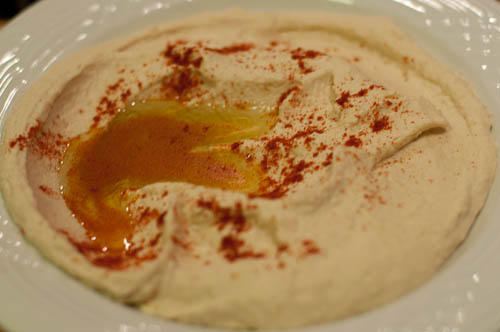
Hummus is immensely popular in Israel, where it is widely acknowledged to be of Arab origin. Ask anyone where to find the best hummus in Jerusalem and they’ll send you to the Arab Quarter. You might think this would be a problem for Arab-Israeli relations, but actually, as noted in a recent article in The Economist, the only thing Israeli and Arab negotiators could agree on in Shepherdstown, West Virginia ten years ago, was the fact that the American hummus was ghastly. Who knows, maybe the Israelis and Arabs will agree to share Jerusalem, so everyone can continue to get their daily chickpea fix. It brings new meaning to the idea of whirled peas.

Having everyone sit down to a meal may sound like a simplistic way to solve such complex international issues, but Senator George J. Mitchell, President Obama’s Special Envoy to the Middle East, had quite a bit of success with just that tactic in the Northern Ireland peace negotiations. He hosted a dinner during which the negotiators were forbidden the topic of politics and were encouraged to discuss more personal things such as family and hobbies. A few days after that dinner, the first glimmers of mutual understanding were seen among the parties, leading eventually to the signing of the Good Friday Agreement. If he tries it again, I would advise Senator Mitchell to get the best hummus money can buy. Or better yet, have the negotiators contribute their own family recipes.

As with many traditional dishes, we don’t know the origin of hummus. The word comes to us through Turkish, from the Arabic. As is often the case with food words, it simply means what it is, “chickpeas.” The full Arabic name of the dish is hummus-bi-tahina (chickpeas with tahina, or sesame paste). If you’ve only ever bought it in the grocery store or made it with canned chickpeas, you may think of hummus as heavy and pasty. The real dish is nothing like that, when freshly made, with good ingredients, it is light and fluffy, with bright lemon and earthy garlic bringing out the flavor of the staid chickpea.

Hummus
adapted from Mediterranean Street Food by Anissa Helou

Makes about 2 cups

1/2 cup dried chickpeas, soaked in water for 4 hours or overnight
1/3 cup tahini
2 cloves garlic, peeled
salt
4 tablespoons lemon juice or to taste
paprika
fruity olive oil
olives (optional)

Drain and rinse the chickpeas. Put them in a saucepan and enough water to cover them by about an inch. Bring to a boil and then lower the heat to a simmer. Simmer the chickpeas partially covered for about 45 minutes or until very tender.

Drain the chickpeas and reserve the cooking water. Place the chickpeas in a food processor with the tahini and garlic. Process into a smooth puree. Check the consistency, it should be creamy, if it’s too thick add a couple of tablespoons of the chickpea cooking water to thin it out.

Add salt to taste, processing to blend it in.

Add the lemon juice a little at a time, processing to blend, until it tastes the way you like. At this point you may need to add more salt to balance the lemon juice. I find that I go back and forth between the two until it tastes just right.

Serve in a shallow bowl or on a small platter. Make a slight depression in the center of the hummus, sprinkle the paprika on top and pour some nice fruity olive oil into the depression. Garnish with olives if you like.

Serve with pita bread and vegetables for dipping.

Photo by Flickr user Shabbir Siraj

I remember the first time I had chai in an Indian restaurant. I was transported to an imaginary spice market, sitting in the shade, watching the crowds flow by, while a merchant tried to convince me that his turmeric was worth the extra money. Good chai is exotic, creamy, sweet, spicy and invigorating, all at the same time.

A certain overpriced coffee purveyor, which shall remain nameless (with a green and white logo) serves a concoction they blithely call “chai.” It comes from a liquid concentrate which is then mixed with steamed milk. When I’ve tried it, all I could taste was the sweetener (I’ll give them credit, it is sugar and not corn syrup) and very little tea or spices. In a quest to duplicate that first chai experience, I decided to make some for myself. It turns out to be incredibly simple and I will most likely never buy chai from a coffee bar again.

First, a little history. The word “chai” simply means tea in Hindi, Punjabi, and actually, many other languages around the world. Tea has grown in India since prehistoric times, in particular in the region of Assam. But until much more recently that you might think, tea in India was seen as an herbal medicine, not an everyday beverage.

India was part of the British Empire from 1858-1947. At the time, the British were prodigious drinkers of tea, consuming about one pound of tea leaves per person, per year. The majority (90%) of that tea was coming from China, expensively imported by the East India Company. As soon as they came into power in India, the British began to cultivate tea plantations there, in order to have more direct control over the source of their favorite beverage. They also grew tea in Ceylon (now called Sri Lanka). By 1900 50% of the tea drunk in Britain came from India and 33% from Ceylon.

What does this have to do with chai in India? Once tea became big business in India the usual trade organizations grew up around it. Specifically of interest in this story is the Indian Tea Association, founded in 1881. Beginning in the early 20th Century, the Indian Tea Association began a campaign promoting tea to Indians. The organization encouraged employers to give their workers tea breaks, and it supported chai wallahs (tea sellers) at strategic locations such as railway stations. Initially, the tea sold by the chai wallahs was the same as you would find in Britain, black tea with a little milk and sugar. The Indian Tea Association did not approve of any deviation from this model. Over time, independent chai wallahs started popping up and they put a local spin on this new beverage by adding Indian spices and boiling all the ingredients together, including the tea. Besides inventing a new drink, this was a way for the chai wallahs to save money and buy fewer tea leaves. When tea leaves are boiled, the end product is strong and bitter, but this is tempered by the addition of spices and boiling in a mixture of milk and water. To distinguish this new, exciting drink from the British version, Indians began to call it masala chai which means “spiced tea.”

Before we look at the recipe, take a moment to watch this lovely short film by Nick Higgins of a holy man brewing masala chai over a twig fire in New Delhi.

Masala Chai

Makes 2 small cups

There are just about as many recipes for masala chai as there are people in India, so feel free to experiment with different spices, amounts of milk and sugar, and cooking time until you get something you like. Other popular spices include star anise, fennel, mint leaves, liquorice, and saffron. One tip: don’t skimp on the sugar, it brings out the flavors and counteracts the bitterness of the tea.

1/8 teaspoon ground ginger
2 whole cloves
1 cinnamon stick
2 whole black peppercorns
2 cardamon pods
1 tablespoon of black tea (I like to use Assam)
1 1/4 cups water
1/3 cup milk
2 tablespoons brown sugar (turbinado or demerara are nice)

Lightly crush all of the spices. Put the tea, spices and water in a pot and bring to a rolling boil. Turn the heat down and let it simmer for about 3 minutes. Add the milk and sugar and stir.

Bring the mixture to a boil again. As soon as the milk begins to foam up the sides of the pot, remove it from the heat and strain through a fine mesh strainer into a pot from which you will serve it.

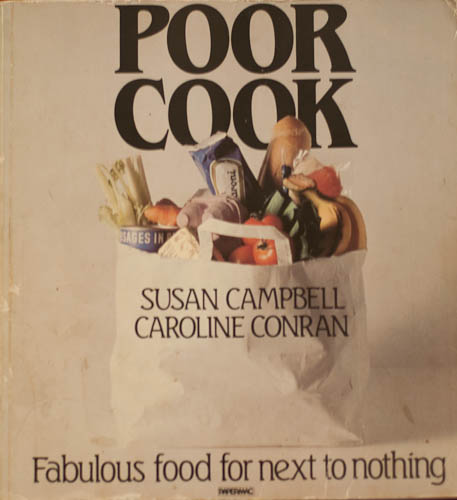
During an uncharacteristic flurry of New Year’s cleaning, I found myself weeding the bookshelves; always a difficult prospect, but especially when it comes to the cookbook section. Well, it turns out my hoarding instincts sometimes pay off. Growing up in Australia, my husband was given a British cookbook called Poor Cook: Fabulous Food for Next to Nothing by Susan Campbell and Caroline Conran. I love quirky old cookbooks and so would never get rid of it. On a lark, I looked to see if it was still in print. It isn’t. However, used copies are going for over $100 on Amazon!

Originally published in 1971, Poor Cook is remarkably prescient when it comes to discussing the intrusion of convenience foods on the home kitchen. In the introduction, authors Campbell and Conran write that, “pre-packed foods have been expensively prepared by other people, however cheaply they may have been bought in their original state, and are lavishly packaged and advertised. And if the people who enjoy feeding their families continue to carry their shopping baskets steadfastly past the supermarket door, in search of the odder cheap ingredients, then the shops will go on selling them, but if nobody asks for things like belly of pork and breast of lamb they will soon disappear for ever.”

Sound familiar?

They also heap praise upon their local butchers, thanking them in the acknowledgements and reminding readers that they should, “always be extra nice and good-tempered in the butcher’s shop; it really is worth being good friends with the man who sells you your meat. He will advise you which piece of the animal would be most suitable, if you tell him what you want the meat for. He is also more likely to be prepared to do tedious work in the way of boning, mincing and cutting a joint just so, if he is your friend and sees that you care, and if you make a point of going into the shop when it is not particularly busy.” And here I thought rock star butchers were a phenomenon of the 21st Century.

For all it’s similarities to the modern day, the book also shows the difference between the cookbook publishing industry then and now. Along with wholesome, simple recipes for dishes like Chicken Broth with Butter Dumplings, and Brisket in Beer, the book has an entire chapter titled “Pâtés, Terrines, Pies and Brawns” which includes some challenging dishes such as Galantine of Breast of Veal, and Brawn (aka headcheese), which modern readers are only used to seeing in specialty books like Michael Ruhlman’s Charcuterie. Campbell and Conran admit that things like terrines and raised pork pie “are all quite considerable tests of cooking ability,” but they warmly encourage the reader, saying, “don’t be surprised if the first one you make looks a bit strange; it gets better with practice, and it is a lovely thing to be able to produce at a picnic.” I much prefer this to today’s 30-minute wonder books.

As in many parts of the world in the late 60s and early 70s, food prices in Britain were climbing. Campbell and Conran wrote this book to help people get back to traditional cooking with cheap, simple ingredients. With foreclosures and unemployment at record highs, that’s something we could use a little of right here in 2010. Throughout the year I will cook some recipes from Poor Cook to see if they are as affordable now as they were back then; and more importantly are they tasty? Meanwhile, when you get around to your Spring, or Summer or whenever cleaning be sure to check those shelves for hidden, out-of-print gems.

I couldn’t resist starting with the terribly English sounding Toad in the Hole. We have no solid evidence for the origin of the name. The earliest usage is 18th Century and there is an English pub game with the same name, but that’s about all we know. The dish is essentially sausages in a Yorkshire Pudding-type batter; not exactly diet food, but great eating in this cold weather we’ve been having. The batter poofs up around the sausages into a light eggy cloud with crispy edges. The version in Poor Cook also includes bacon which I haven’t seen before, but who am I to argue? As long as you don’t buy fancy gourmet sausages and bacon, you can serve four people for about $10. Add a salad and a side of Boston Baked Beans, and you’ve got a cheap and cheerful winter dinner.

Toad in the Hole

adapted from Poor Cook by Susan Campbell and Caroline Conran

Serves 4

4 large sausages
4 slices bacon
4 oz. all purpose flour (about a cup)
1/2 teaspoon salt
2 large eggs
1 generous cup milk
2-3 tablespoons lard or canola oil

For the batter, use a fork to blend the flour and salt in a mixing bowl. Make a well in the center and break the eggs into it. Gradually add the milk while mixing with a portable mixer or a wooden spoon until all of the flour is absorbed into the batter, there will still be some milk left. Add the rest of the milk and then beat for 2-3 minutes with a portable mixer or 5-10 minutes with a spoon. Cover the batter and let stand in a cool place for 1 hour.

Preheat oven to 475F.

In a skillet, fry the bacon for 2-3 minutes and remove to a plate. Add the sausages to the skillet and cook until they are nicely done. Put the lard or canola oil into an 8 x 8 inch baking dish and place it in the oven for 5 minutes to get it nice and hot. When the lard is melted and hot or the oil is hot, put the bacon in the bottom of the baking dish and the sausages on top, lying parallel to each other and return the dish to the oven for about 5 minutes. Have your batter ready, take the baking dish out of the oven, pour the batter over the meats and return the dish to the oven. Bake for 5 minutes at 475F and then lower the temperature to 425F and bake for 35-40 minutes. The batter will puff up around the sausages and turn a rich golden brown.

Full of Beans

When icy drafts seep through the old windows in our apartment I start thinking about slow cooking. Any dish that requires me to have the oven on for most of the day is a bonus at this time of year, and it also fills the place with tempting aromas. Happily, we have lots of country ham left over from our Yankee Southern Christmas so I thought I would try combining it with it’s classic partner, beans. As mentioned previously, my Mom is from New England, so of course the first thing that popped into my head was Boston Baked Beans.

If you’ve only had “baked beans” from a can, you don’t know what you’re missing. The real thing is totally different, richly infused with the flavor of pork and the earthy tang of Blackstrap molasses. Being a history nerd, I have a facsimile of the Boston Cooking-School Cook Book by Fannie Merritt Farmer which was published in 1896. I figured that would be the best place to go for an authentic recipe. Her recipe uses salt pork but my left over country ham makes a good substitute.

In the process of making this dish I learned a lot about molasses and food science. For a deep complex flavor that is not too sweet, be sure to use real Blackstrap molasses in your Boston Baked Beans. When sugar cane juice is boiled to extract sugar crystals, molasses is left behind. There are three grades of molasses, first molasses, also known as mild or Barbados is produced by the first boil; dark or second molasses comes after the second boil, and finally, Blackstrap molasses from the third boil. Each boiling session creates a more complex and less sweet product. Blackstrap molasses also has the advantage of being very high in some important nutrients such as calcium, magnesium, potassium and iron. It is often sold as a health supplement, so if you can’t find it in your grocery store, try a health food store.

You’ll notice in the recipe that you cook the beans on the stovetop first, and then put them in the oven for a long slow bake. Here’s where I got a lesson in food science from the great Harold McGee. In his book On Food and Cooking: The Science and Lore of the Kitchen, he explains that beans like an alkaline environment for cooking. Once they are exposed to an acid they will not become any more tender, no matter how long they are cooked. Our ancestors may not have had chemistry degrees, but they figured out that if you add molasses to the beans before you put them in the oven, you can leave them there for six hours and they don’t turn to mush. That’s because molasses is an acid and so it helps the beans keep their shape and texture, but they must be fully cooked first.

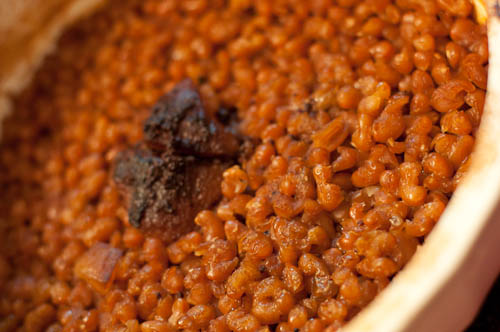
The origin of Boston Baked Beans is somewhat cloudy. We know that Native Americans in the area cooked beans with maple syrup and bear fat, so it isn’t too much of a stretch to see how that might become molasses and pork fat. This dish was also perfect for the Puritan household where no cooking (or even lighting of the fire) was allowed on Sundays. So Goodwife Smythe would bury the bean pot in the coals of the fire on Saturday night and by the next day the beans were done and could be eaten without breaking any religious tenets. Serve with hearty brown bread for a flavorful, yet healthy antidote to the excesses of the holiday season.

Boston Baked Beans
Adapted from Fannie Merritt Farmer

The traditional bean pot has a lid and its body bulges out slightly in the middle. I used an oven-safe soup tureen. If you don’t have something like that, use a casserole dish and cover it with aluminum foil for most of the baking.

Makes about 4 cups of beans

1/2 pound of dried navy beans (about 2 cups)
1/4 pound of salt pork or country ham
1 1/2 teaspoons salt
1 1/2 teaspoons molasses
4 1/2 teaspoons brown sugar (I like to use Turbinado or Demerara)

Soak the dried beans in water to cover for 4 hours or overnight, then drain and rinse.

Put the beans in a medium saucepan and add enough water to cover them by 2 inches. Slowly heat the water until the beans come to a bare simmer with just a couple of bubbles breaking the surface. If you boil them too hard, their skins will split. Simmer the beans half covered until they are tender, about 30-45 minutes. It is important not to overcook them, so check for doneness every 15 minutes beginning at the 30 minute mark.

Preheat oven to 250F.

When the beans are cooked drain them. Cut a thin slice from the salt pork or ham and put it in the bottom of your bean pot. Pour the drained beans in and then bury the remaining salt pork or ham in the beans with just the rind of the salt pork or fat side of the ham showing.

Mix the salt, molasses and brown sugar with one cup of boiling water and stir until dissolved. Pour this mixture over the beans. If needed add more boiling water to just cover the beans.

Put the lid on the bean pot or cover your casserole with aluminum foil and bake it in the oven for 6-8 hours, uncovering for the last hour to allow the pork to brown. Check the beans occasionally and add water if needed. When done there will be a little liquid left to form a tasty sauce, but most of it will boil away.

The Spirit of Ginger

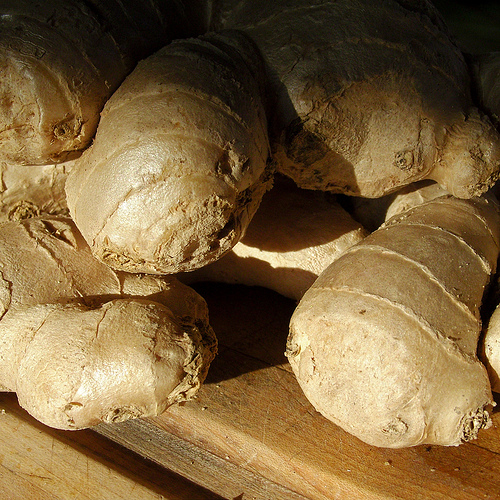
Photo by Flickr User vieux bandit

Recently we bought some fresh ginger root and I was about to wrap it in aluminum foil and put it in a zip top bag in the freezer when I found myself wondering how people used to store it before freezers were everywhere. It turns out the answer, as is often the case, is alcohol!

Years ago I bought a wonderful reference book called Keeping Food Fresh by Janet Bailey which is basically the ultimate guide to choosing and storing all kinds of food. I’m always going to it to answer questions like these. Ms. Bailey gives several ways to store fresh ginger root, including my freezer solution, however she says the most intriguing one she has run across is submerging the whole root in sherry and storing it in the refrigerator. She goes on to suggest uses for the ginger flavored sherry which results from this happy combination, including salad dressing and a little something to liven up your next stir fry.

Further research revealed that many kinds of spirits have been used for this purpose, including brandy, vodka, sherry, and sake. It seems that a fairly high alcohol content is required since most sources do not suggest wine. Completely submerging the root (peeled or unpeeled) in distilled spirits or sake (which runs about 18-20% alcohol) is said to preserve it for six months. Ms. Bailey only gives ginger stored in the freezer a life of four weeks, so I had to give this a try.

Our ginger had two sections so I cut it apart and stored one the usual way in the freezer and put the other in a recycled mayonnaise jar, covered it with vodka and stashed it in the fridge. Really, I’m guessing that the fridge isn’t strictly necessary, but I have one so why not increase the chances of success?

I am most intrigued by the cocktail and cooking possibilities conferred by this method of ginger storage. If I had enough sherry in the house (we’re running low from the holidays) I would have used that instead. I love the idea of throwing a bit of gingery sherry from the jar into a sauce or salad dressing. For now, I will have to be content with thoughts of ginger flavored vodka cocktails. Not a bad trade off I’d say.

Cheers!

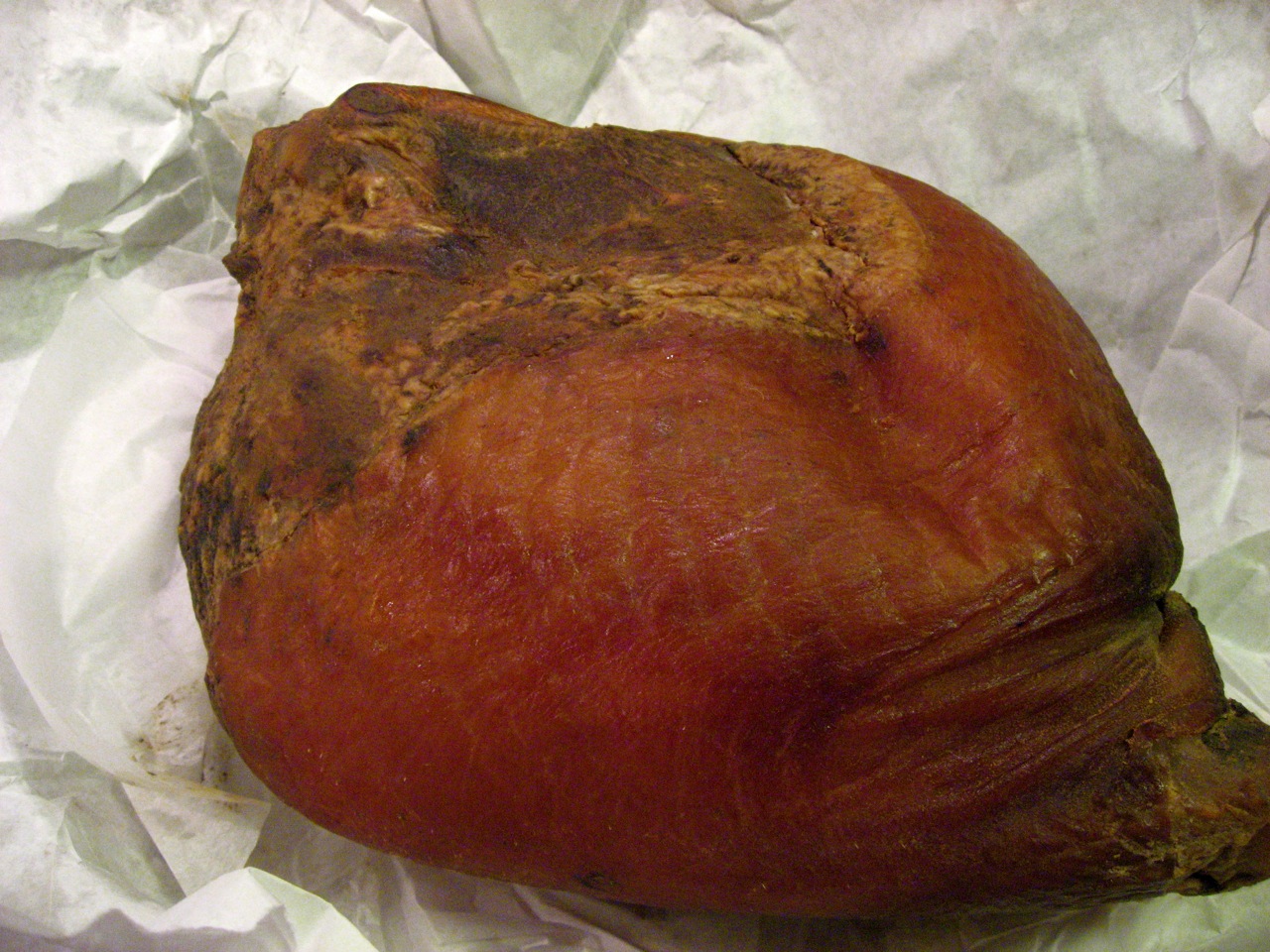
My mother is from Connecticut, my dad was born and raised in the Bronx, and my husband is Australian, leaving me no defense against being called a Yankee; or at least a Yank in my husband’s case. Hewing to stereotype, our Yankee family usually has a standing rib roast and yorkshire pudding for Christmas dinner, but I think it might be time for a change. This year I’m making a southern-style Christmas dinner, with aged Kentucky country ham as the centerpiece, surrounded by traditional sides like collard greens and corn bread.

How did this come about? Well, I confess to being lured in by Saveur‘s most recent issue and its focus on all the different ways ham is prepared as a celebratory food around the world. I’ve been served aged country ham in the past, by a friend who grew up in the south, and when I started reading up on the history, that clinched it.

American aged country ham is a traditional food of the south, found mainly in Virginia, Kentucky, Maryland, Tennessee, the Carolinas, Georgia, and Missouri. It is actually a close cousin to prosciutto, jamón ibérico, speck, and other similar European dry aged hams. All of these styles of ham rely on a salt cure to suck the liquid out of the meat, preserving it and concentrating its flavor. After the salt cure (which sometimes also includes sugar and spices), the ham can be smoked (or not) and then hung in a cloth wrapping to age for at least 6 months.

Due to the time consuming nature of this process, it’s getting harder and harder to find a true dry aged country ham. Some of the old makers have been bought out by larger companies who are now taking shortcuts with the process to yield more profit. Even in the 1970s when James Beard was writing his American Cookery, he said, “Nowadays one seldom finds a ham aged more than two or three years. Formerly it was not uncommon to find them aged six or seven years, especially from Virginia or Kentucky.” Adding to his lament, I can say that during my research for Christmas dinner, I could only find hams that had been aged for one year.

I decided to go with Col. Bill Newsom’s Aged Kentucky Country Ham for my Christmas dinner. I like the fact that the company is owned by the founder’s granddaughter and she still uses the same 18th Century family recipe to cure the hams, which includes a salt and brown sugar cure and then a slow smoke over hickory wood.

Ham ordered, I began to research recipes. A word of caution: there are many horror stories on the Internet, from people who heard about the wonders of aged country ham, decided to try it out, but cooked it the same way they would a ham bought in a (Yankee) grocery store. Aged country ham needs to be soaked for one or two days before cooking to remove the excess salt left from the curing process. If you don’t do that, it will taste like a piece of rock salt with ham flavoring. It is also important to serve aged country ham sliced as thinly as possible (think prosciutto here) and at room temperature which makes it taste less salty.

As with all traditional foods, there is much lore surrounding the best way to prepare it. Betty Fussell, and others claim that tea in the soaking water will help draw out the salt. I’m going to try out that suggestion and see what happens. Other popular recipes include the use of Coca-Cola or Dr. Pepper as part of the braising liquid. I think I’ll stick with white wine, or maybe apple cider, and a little Calvados (see, I’m still a Yankee at heart). The final question is, to glaze or not to glaze? I’m not sure yet. I’m thinking a fruity, but not too sweet, glaze could be a nice foil for the intense, salty ham. Other traditional options include bread crumbs, brown sugar and mustard; or molasses, brown sugar and mustard. So many choices!

Below I’ve listed our complete Yankee Southern Christmas menu and I wish you and yours a sumptuous and flavorful holiday!

Col. Bill Newsom’s Aged Kentucky Country Ham

Nigella Lawson’s Sweet Corn Pudding

Melissa Clark’s Wildflower Honey and Whisky-glazed Sweet Potatoes (except I’ll be using Bourbon instead of Whisky)

Collard Greens braised slowly with the ham hock cut from our country ham

Robb Walsh’s Cane Syrup Pecan Pie

Homemade Christmas

I first started making food gifts for Christmas when I moved away from home. I was a starving young person trying to eek out a living in the big city and cooking gifts was a lot cheaper than buying them. But there are other advantages as well. Don’t tell anyone, but it’s a lot easier and more relaxed to make your presents. The only shopping you have to do is for ingredients and the grocery stores are not nearly as crowded as the malls and boutiques. If nature decides to dump a big pile of snow on your home the weekend before Christmas, it doesn’t disrupt your plans because you were going to stay in and cook up gifts anyway. The best part of giving homemade food gifts is the appreciation you get in return. If the receiver of your gift is a cook themselves, they know how much work went into it and are genuinely thankful. If they’re not a cook, they are likely to be even more in awe of your skills. You can’t lose.

Cookies are of course one of the first things people think of to make as presents. I like to make several different kinds, for festive variety. This can get complicated quickly, the first time I tried it, I found myself in the kitchen for what seemed like weeks, making five different cookie doughs. Through experience (and reading lots of cooking magazines) I learned how to make it a lot easier on myself. Many cookie doughs are quite similar, so you can start with one or two base doughs and transform them into quite a number of very different cookies. Have a look at this article from Fine Cooking magazine. They give three dough recipes that can be made into nine different cookies! If you’re really organized (and have the space) you can bake them in advance and freeze them.

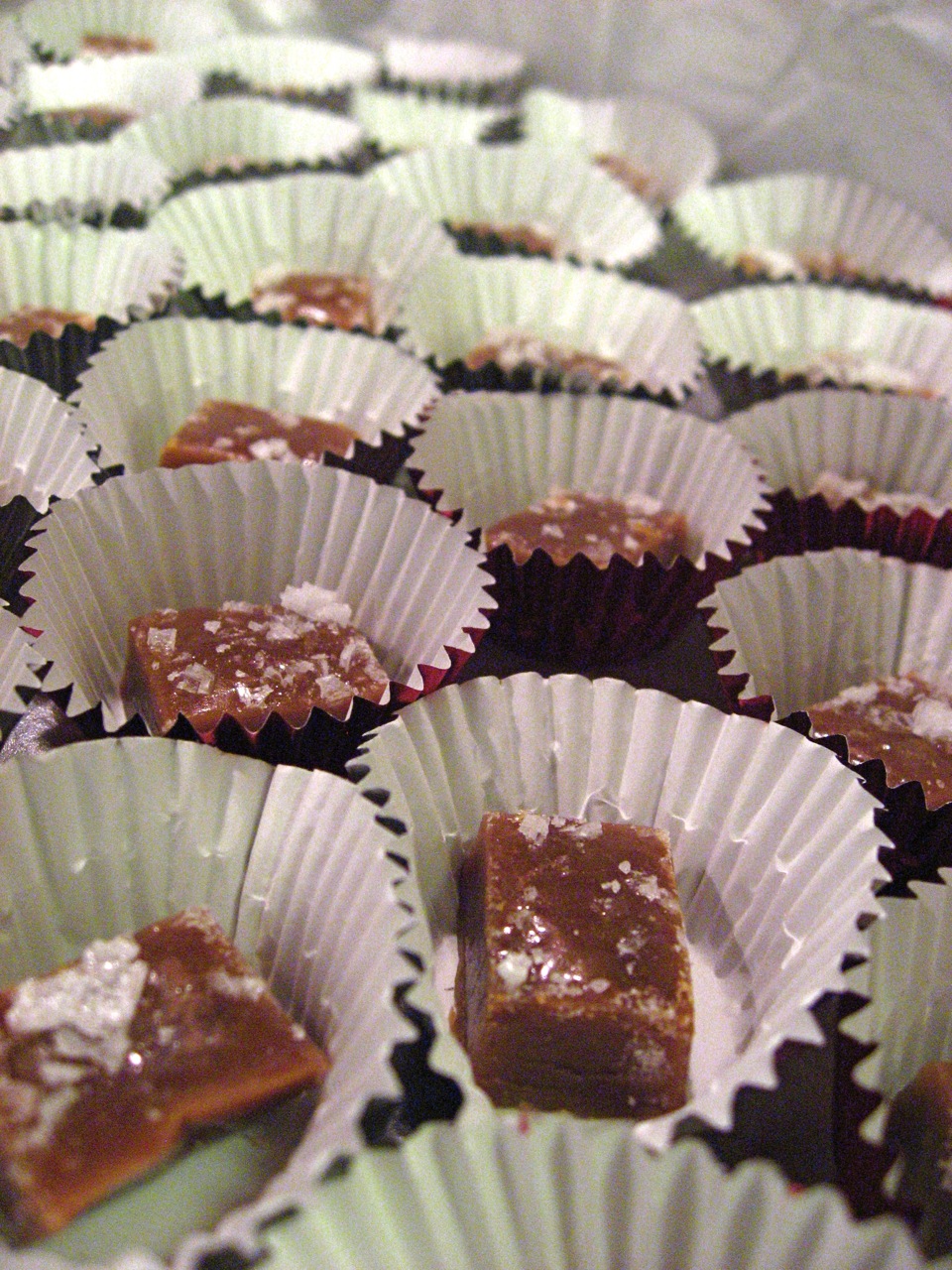
I like to turn Christmas gift cooking into an opportunity to learn new things. While this can be dangerous if you have a disaster, it keeps things interesting. Just give yourself enough time to make a backup gift if your experiment doesn’t turn out. This year I tried my hand at candy making. I’d made peanut brittle in the past, but had never tried caramels. My first batch turned out a little harder than I wanted — more like toffee — but with some adjustments to the cooking time, I’m hoping the second batch will be nice and chewy. So, some friends and family will get toffee this year and others will get caramels. As Saint Julia says, “never apologize.” So what if it’s not exactly what you planned, if it’s tasty, then who’s to know?

I’m already thinking about next year’s gifts. Winter is the height of the citrus season, and here in New York we get lots of beautiful lemons, oranges and grapefruits from Florida, California, and Europe. Maybe I’ll try making a citrus fruit curd next year. If you’ve seen the price on imported jars of English lemon curd, you’ll know why this makes a great gift. The other secret is, it’s dead easy to make. Most recipes are for lemon, but you can substitute any citrus fruit; I’m thinking grapefruit would be fun. The best recipe I’ve seen is again from Fine Cooking, can you tell I’m a fan? Tangy, citrusy gifts are the perfect thing to brighten up these dark days of winter.

Happy Holidays!

The other day I was in my local grocery store, reading labels like the food geek I am, when I wandered past the apple sauce shelf. I was shocked to discover that most of the jars contained not only apples, water, and some ascorbic acid (to keep the sauce from turning brown), but they also had High Fructose Corn Syrup (HFCS) in them. Each brand seemed to have one version that was unsweetened, usually labeled “natural” or “original.” But if you wanted chunky apple sauce or apple sauce with cinnamon, then you had no choice but to also accept HFCS. There were a couple of organic brands which did not have ascorbic acid in them (maybe organic lemon juice is expensive?). They also had sweetened and non-sweetened versions but used sugar instead of HFCS. Does anyone make organic HFCS? There’s an ironic food product for you.

Why would anyone put sweetener in apple sauce? I mean sure, if you’re using older apples that have been in storage all winter then they might need a bit of a boost, but come on, apples are one of the sweetest foods in existence. Heck, a lot of “hippy” products are sweetened with apple juice instead of sugar. Oh, and even worse, the small 4 ounce cups of apple sauce meant to go in kids’ lunch boxes were all sweetened. I’m sure someone makes a “natural” lunch box apple sauce, but my store didn’t have any that day.

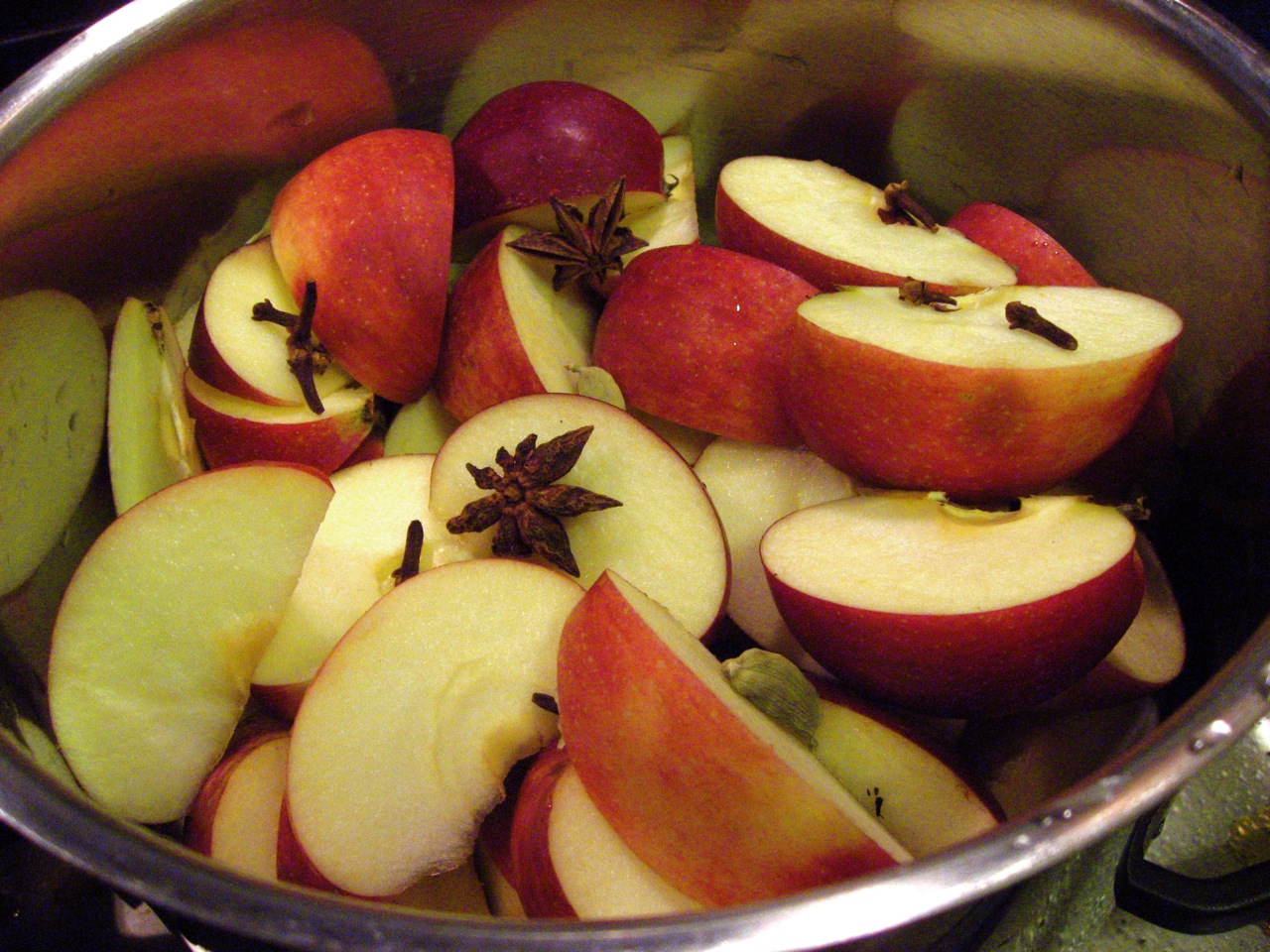
When I got home from the grocery store, I was standing in the kitchen shaking my head over America’s apparent addiction to sugar, when I saw a bowl of apples on the counter. About half an hour later, I filled most of a quart-sized jar with homemade pink apple sauce spiced with star anise, cardamom, and cloves, no sweeteners here thanks. I used 6 apples and I wound up with about 3 cups of sauce. Apple sauce is one of the easiest things to make yourself and it’s fun to experiment with wild spice combinations, I think next time I’ll try some fresh ginger.

Normally, I’m not a big kitchen gadget lover. I live in a small New York City apartment and gadgets must earn the right to live in my kitchen by proving they are truly useful at multiple tasks. One of the few gadgets granted this honor is my food mill. In summer I use it for making jams and jellies, it helps a lot in making really smooth cold soups like vichyssoise, and it’s really good for making apple sauce. If you have a food mill there is no need to core and/or peel your apples, just chop them into eight pieces each and that’s it. Once the apple sauce is cooked, you let it cool and then run it through the food mill which purees the cooked apples and removes the skin, seeds and spices. Leaving the skin on the apples makes the sauce turn pink, which I think is particularly attractive. I also think the skin and seeds impart more flavor to the final sauce.

Apple sauce is a great staple to have around the house. I love stirring it into oatmeal in the morning, it’s a great side dish with pork, and you can use it for a quick dessert like apple sauce cake.

Homemade Apple Sauce

Makes about 3 cups

6-8 apples, any variety you like
water
2 star anise pods
2 cardamom pods
4 whole cloves

Cut your apples into 8 pieces each and put them in a sauce pan with just enough water to cover the bottom of the pan which will keep them from sticking. If you do not have a food mill peel and core your apples before putting them in the pan.

Add the spices. Cover and cook over low heat for about 15-20 minutes or until the apples are very soft. Take the pot off the heat and allow to cool for about 10 minutes. Pour the cooked apples into the food mill. Discard any water than strains through the food mill, then puree your sauce. If you don’t have a food mill, remove the spices from the cooled apples and mash them with a potato masher. If the sauce is too watery, pour it through a fine mesh strainer. Store, covered, in the refrigerator.

Variations:

Use more than one apple variety for more complexity and depth of flavor.

Try any spice combinations that sound interesting to you. Here are some suggestions: cinnamon, nutmeg, mace, fresh ginger, cloves, star anise, and cardamom. Whole spices are always better if you have them; for nutmeg, grate it into the pot.

If your apples are old, you might add a tablespoon or 2 of sugar. Old apples also benefit from 2 tablespoons of butter for extra smoothness. Stir the butter into the finished sauce while it is still warm.

For an adult apple sauce, use brandy or Calvados (French apple brandy) instead of water.

In his book In Defense of Food: An Eater’s Manifesto, Michael Pollan writes that that stone ground flour is more nutritious than flour made in a mill equipped with metal or porcelain rollers. The thing that really surprised me is that he wasn’t just saying that whole wheat flour is healthier (which it is), but that white flour ground with stones is healthier than white flour ground with rollers.

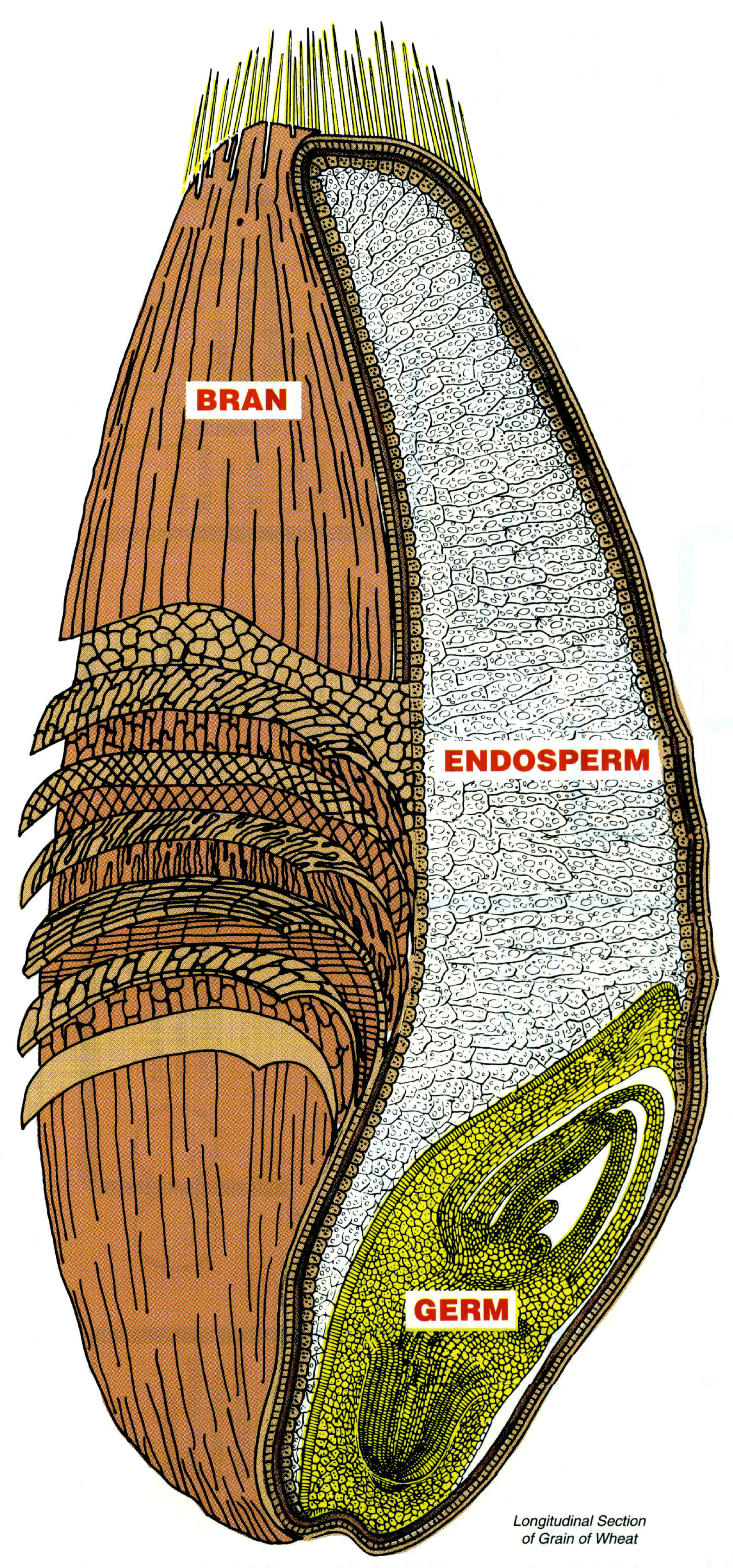
I decided it was time for me to learn a little about the history of flour. After all, it’s a ubiquitous ingredient, seen in cuisines the world over and humans have been making it for thousands of years. For the purposes of this article I’ll be discussing wheat flour, but of course there are many other flours used in different cultures. First, a little wheat nutrition lesson, and then we’ll explore the different ways there are to make flour. A kernel of wheat has three parts, the bran, the endosperm, and the germ. Here’s an illustration:

Most of wheat’s important nutrients are located in the bran and the germ. The bran contains insoluble fiber (important for digestive health), incomplete protein, some trace amounts of B vitamins, and Iron. The germ is the most nutritious part of the wheat kernel containing protein; vitamin E; almost all of the B vitamins, including folic acid; carotenes and other antioxidants; and omega-3 fatty acids. The endosperm (which is the largest part of the wheat kernel) consists of carbohydrates, incomplete protein and trace amounts of vitamins and minerals.

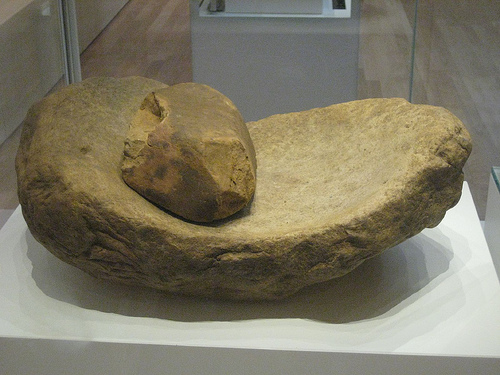
One of the oldest technologies for making flour is the combination of a stone mortar and pestle to initially break the grain, and the saddle quern for grinding it. The saddle quern is an elongated stone with a depression in it where the grain is placed, and then a woman (it was usually a woman) kneels in front of the short end and pushes a smaller stone back and forth over the grain in a rocking motion. It takes a long time to make any useful amount of flour in this manner. In fact, archaeologists examining women’s bones from a Neolithic site in what is now Northern Syria, found many of the women had deformities to their toes, legs, back, and pelvis which can be attributed to spending many hours kneeling in front of a saddle quern. Boy am I glad we don’t have to make flour that way anymore!

A Saddle Quern / Photo by Flickr user unforth

The next development is the rotary quern which consists of two round stones placed on top of each other. The lower stone is slightly convex, and the upper, concave. The top stone has a vertical handle coming from it’s top and a hole in the middle where the grain is fed. The operator (also most likely a woman) uses the handle to turn the top stone, grinding the grain between the stones. The finished flour flows out from between the edges of the stones. Some versions included a spout which would feed the finished flour out into a container. Here’s a great video of someone operating a rotary quern. That still looks like an awful lot of work to get enough flour to make a loaf of bread.

As one might expect, the ancient Greeks and Romans made some important contributions to grain milling technology. The Romans built larger versions of the rotary quern and used animal or slave power to drive them and the ancient Greeks invented the first water mill. A wooden spindle ran from the top stone through the bottom stone. This spindle extended down into a stream and a horizontal water wheel was placed on it. The flow of the water causes the top stone to turn, thus grinding the grain. Eventually the Romans turned the water wheel in the other direction and used gears to transfer the power of the water to the grinding stones. This configuration: a vertical wheel, gears, and two grinding stones working in a rotary manner, remained the predominant method of milling flour until roller mills were introduced in Europe in the 19th Century. There were some changes as to how the stone mills were configured and powered, but essentially the technology was the same for almost 2000 years.

A Model of a Roman Water-powered Grain Mill as Described by Vitruvius (born c. 80–70 BCE, died after c. 15 BCE)

The latest development in flour milling I’ll discuss here is the replacement of grind stones with metal or porcelain rollers which happened around 1870. A mill equipped with rollers uses multiple sets of them turning at different speeds to break the grain and then to grind it. Rollers were faster than grind stones, they produced more flour from a pound of grain and they produced a product with a longer shelf life (more on that later). So it makes sense that the millers of 19th Century Europe and America would jump at the chance to convert their mills to this new technology that would help them make more money and increase their customer base. In fact, in only took about 10 years for most stone mills to be replaced by rollers.

A Modern Flour Mill / Photo by Kate Waxon

So, how do these different milling technologies affect the nutrition of the flour? At some point people discovered they could separate the bran and the crushed pieces of germ from ground wheat fairly easily by sifting it through cloths of an appropriate weave. In Medieval England this was called “boulting” and by using multiple cloths of differing weaves quite fine flour could be made which contained little bran and germ. However this “white” flour still contained the oil from the germ which was released when the germ was crushed during milling. Wheat germ oil, being rich in beta carotene, gave a yellowish gray cast to the flour. The oil also began to oxidize as soon as it came into contact with air, which meant that this “white” flour would only stay fresh for about six months, after which time the wheat germ oil would turn rancid, affecting the taste.

This all changed when rollers were introduced. When grain passes through two rollers moving at different speeds the slower one holds it and the faster one strips it. This meant that not only could the outer bran of the grain be removed as could be done with stone milling, but the germ could be scraped off before grinding. And so was created the first truly white flour, ground solely from the endosperm of the wheat. It was a snowy white and due to the lack of wheat germ and wheat germ oil, it had double the shelf life of the old style “white” flour. Before roller milling was introduced, “white” flour was very expensive and only affordable to the wealthy. The poor used what we would call whole wheat flour today and the truly poor could only afford rye or barley flour. Once roller mills made it more affordable, white flour’s popularity exploded and everyone felt wealthy to have it.

Unfortunately, the lack of nutritional knowledge at the time, meant that millers didn’t understand that in removing the germ from their flour they were taking away a major source of vitamin B, especially from the poor for whom bread was the main source of nourishment. Once roller mills became ubiquitous we see a higher incidence of diseases caused by lack of B vitamins such as pellagra and beriberi.

Once the requisite vitamins were discovered and better understood (during the 1930s) we began enriching some of our flour with Iron, Niacin, Thiamine and Riboflavin. Folic Acid was added to the list in the 1990s. These are of course the nutrients contained in the wheat germ which was removed during the roller milling process. In stone ground “white” flour there is no need for enrichment.

Having learned some of the history of flour milling and how it affects our nutrition, I would now like to bake some bread with stone ground “white” flour and compare it to bread made with good quality all purpose, unbleached, roller milled flour. I’m curious to see if the flavor, color or texture is different. After a cursory bit of looking around, there seems to be plenty of stone ground whole wheat flour available in the US, but hardly any stone ground “white” flour. So far I’ve only found it at Wade’s Mill in Virginia and Central Milling in Ogden, Utah. I might consider mail ordering some from them, but since freshness is so important, I’d really rather get it locally. Please contact me if you have any sources in the New York tri-state area and stay tuned to read the results of my bread baking experiments.

Sources:
Campbell, Judy, et. al. “Nutritional Characteristics of Organic, Freshly Stone-Ground, Sourdough and Conventional Breads” in Ecological Agricultural Projects (McGill University, Quebec, Canada, 1991)
Elton, John “Evolution of the Flour Mill, From Prehistoric Ages to Modern Times” in Souvenir of the First International Miller’s Congress and Annual Convention of the National Association of British and Irish Millers (Paris, 1905)
Hazen, Theodore, R. “How the Roller Mills Changed the Milling Industry” in Pond Lily Mill Restorations
Pollan, Michael. In Defense of Food: An Eater’s Manifesto (New York: The Penguin Press, 2008)